Berlin Pride - CSD Berlin
Berlin Pride, also called CSD Berlin, is one of Europe’s largest Prides, making it a global LGBTQ+ hotspot. Many of Berlin’s iconic queer clubs, like Berghain and KitKat, host massive Pride weekend parties, combining Pride with the city’s legendary electronic music culture.
Pride Date Berlin
The Pride normally takes place on the last weekend in July each year. Berlin calls the month from end of June to end of July the Pride Month with many more events taking place. The final highlight of the celebrations is the Pride Parade on a Saturday.
When is the Berlin Pride taking place in 2027?
In 2027, the event is scheduled for Saturday, July 24. It will be the 49th time the CSD is taking place in 2027.
What is the main party at Berlin Pride?
The main party is organized by the Pride organizers’ and is taking place at Ritter Butzke each year. Its an huge event with 7 different dance floors and a big outdoor backyard.
- House of Pride @Ritter Butzke (Saturday night)
There are a couple of other parties taking place:
- Propaganda @Weekend Club
- Gegen X Prncptl @Komplex Berlin
- Girlstown @Maya
- There might be again an after party by Unleashed.
Pride Route Berlin
The parade will follow the traditional route that starts at Leipziger Straße -> Potsdamer Platz -> Potsdamer Straße -> Bülowstraße -> Nollendorfplatz -> Kleiststraße -> An der Urania -> Schillstraße -> Lützowplatz -> Klingelhöferstraße -> Hofjägerallee -> Großer Stern -> Straße des 17. Juni and ends at Brandenburger Tor.
Parade Starting Time
The parade typically starts at 11:30 AM with an opening speech at Leipziger Straße. The start of the first float is at noon. The route usually takes at least 5 hours before the first floats arrive at Brandenburger Tor with the last floats arriving much later.
Key Facts
When did Berlin Pride first take place?
The first Pride in berlin took place on 30 June 1979 in the Western part of Berlin. Back then it was only around 450 participants attending the march. It was organized to memeorize the tenth anniversary of the Stonewall Riots in New York’s Christiopher Street (hence the German name Christopher Street Day, short CSD) and to protest for equal rights for the LGBTQ+ community. In 1993 Berlin hosted the second EuroPride after London hosted it in 1992. While the Pride Parade was initially held in the Pride month of June, it nowadays usually takes place end of July. Over the decades, Berlin Pride has grown from a small 450 people protest into one of the largest Pride events in Europe.
How many visitors to Berlin Pride?
Berlin Pride attracts up to 500,000 participants each year, with attendance reaching up to one million in some years. The Pride Parade has around 80 floats and many more walking groups joining in.
What is the theme of Berlin Pride this year?
In 2026 it was: Haltung ist hot” (Taking a Stand Is Hot)
For more information, check the official Berlin Pride Website. For more Pride Events in Europe check the overview of Pride Events in Europe.
Guide to Berlin Pride
Berlin Pride is one of Europe’s largest pride events in one of the gay capitals of Europe. It is known worldwide for its legendary clubs and nightlife. Many parties will have a special Pride event during that weekend, making it almost a bit hard to choose where to go out after the parade.
Why You Should Go
To experience one of Europe’s gay hot spots with even more gays in the city, Berlin Pride weekend is a great opportunity to explore Berlin, even if that can mean some queuing up at some of the most popular spots.
Many visitors arrive the weekend before for the Lesbian and Gay City Festival (Lesbisch-Schwules Straßenfest) at Nollendorfplatz, one of Europe’s largest queer street festivals. It takes place in the heart of Berlin’s traditional gay neighbourhood and its a good warm up for the Pride weekend.
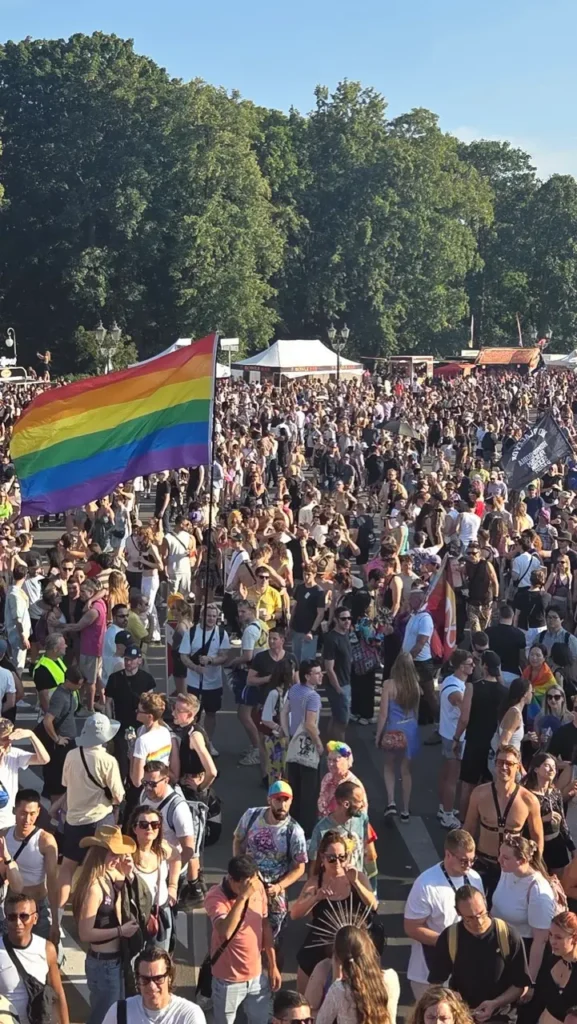
The highlight is Saturday’s Pride Parade through the centre of Berlin, featuring around 80 floats, DJs playing everything from pop to techno. Unlike at some other Pride events, spectators can generally join the parade and follow their favourite floats along the route. So you can join in between the floats and dance to the music and rave with the crowd. Once the Parade reaches the Brandenburg Gate, there is several stages and one main stage where the party continues until afer sun dawn.
Practical Information for Participating
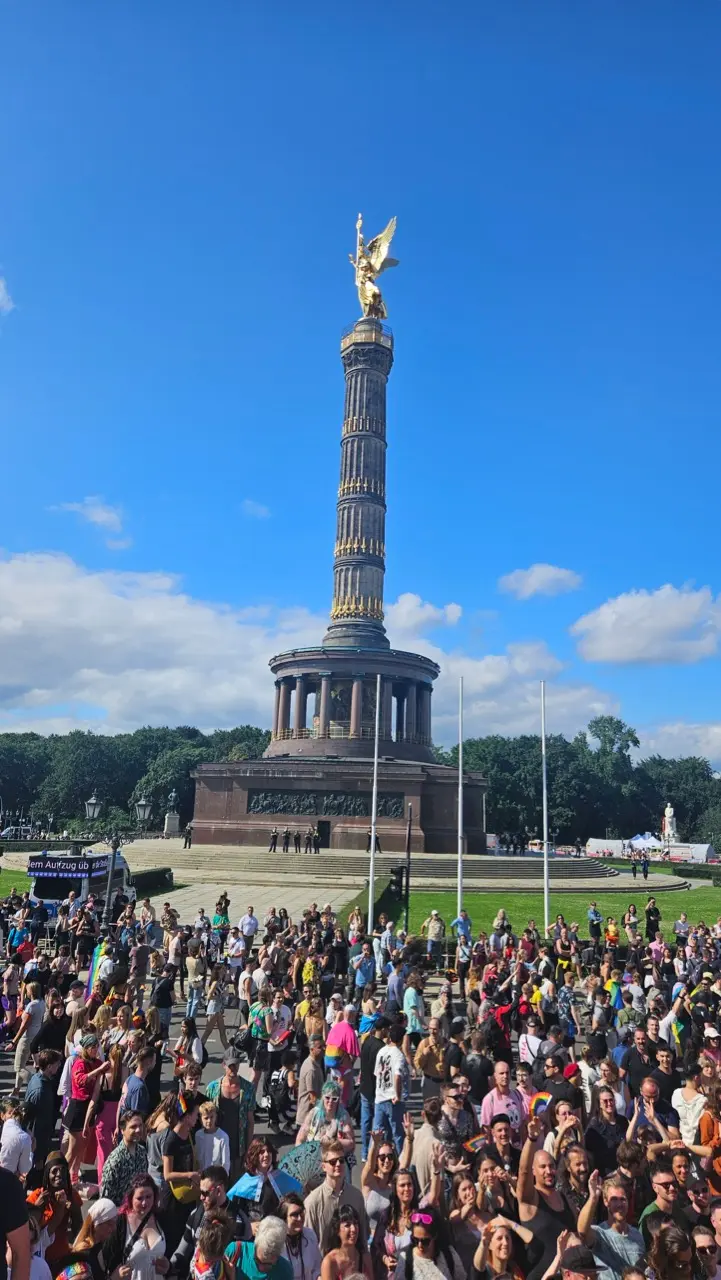
Pro tip: Arrive around 11am on Leipziger Straße (between Charlottenstr. and Axel-Springer-Straße) if you want to experience the parade from the beginning and see all the floats, as this is the assemply point. Potsdamer Platz and Nollendorfplatz are also great viewing spots with big crowds waiting for the floats. The Victory Column offers another really good photo opportunity too.
Bring enough water, sunscreen and comfortable shoes, especially if you plan to walk or rave the entire route. Participation in the parade and the main closing celebration is free of charge.
Even after the parade ends, the party doesn’t stop. The area around the Brandenburg Gate becomes the centre of the official celebrations, while the gay bars around Motzstraße and Fuggerstraße in Schöneberg become particularly busy. Numerous clubs across Berlin host special Pride editions of their regular parties.
Unlike other cities, Berlin’s nightlife is less concentrated in one hot spot. Many of the biggest queer parties take place in Friedrichshain, Kreuzberg and Mitte, while Schöneberg is the main area for regular gay bars.
How long to Stay
If you’re up for the full experience, plan to arrive by Thursday and stay until Monday on Pride Weekend. Berlin is famous for its queer techno scene, with some club events continuing up until Monday noon.
Don’t miss major club nights such as Revolver XXL, the official House of Pride party or special Pride editions of Berlin’s underground queer parties. Make sure to book tickets early for popular events. Also keep in mind that some clubs have selective door policies or dress code.
If you have more time, consider staying for around ten days, starting with the Lesbian and Gay City Festival the weekend before and finishing with the main Pride Parade weekend. This allows you to experience both major events as well as the activities taking place throughout Pride week.
Where to Stay
One of the best places to stay is around Nollendorfplatz in Schöneberg, preferably close to Motzstraße or Fuggerstraße. This puts you within walking distance of many of Berlin’s gay bars, restaurants, cafés and its also close to the queer street festival.
The areas around Wittenbergplatz, Zoologischer Garten and Potsdamer Platz are also convenient options, offering a wide selection of hotels and easy public transport connections.
If you are more interested in Berlin’s queer techno and underground nightlife, staying in Friedrichshain or Kreuzberg, particularly around Warschauer Straße or Ostbahnhof might be a better option.
Make sure to reserve early, as hotel prices can increase considerably during Pride Weekend and summer in general.
However, unlike in many other European cities, staying outside the immediate city centre is not necessarily a disadvantage. Berlin has an efficient public transport network, with U-Bahn and S-Bahn services generally operating throughout the night on weekends.
If you are looking for a cheaper option, consider staying in Moabit, Wedding or Lichtenberg, preferably close to a U-Bahn or S-Bahn station. You can often find more affordable accommodation without being too far away from the main Pride activities.