Dublin Pride
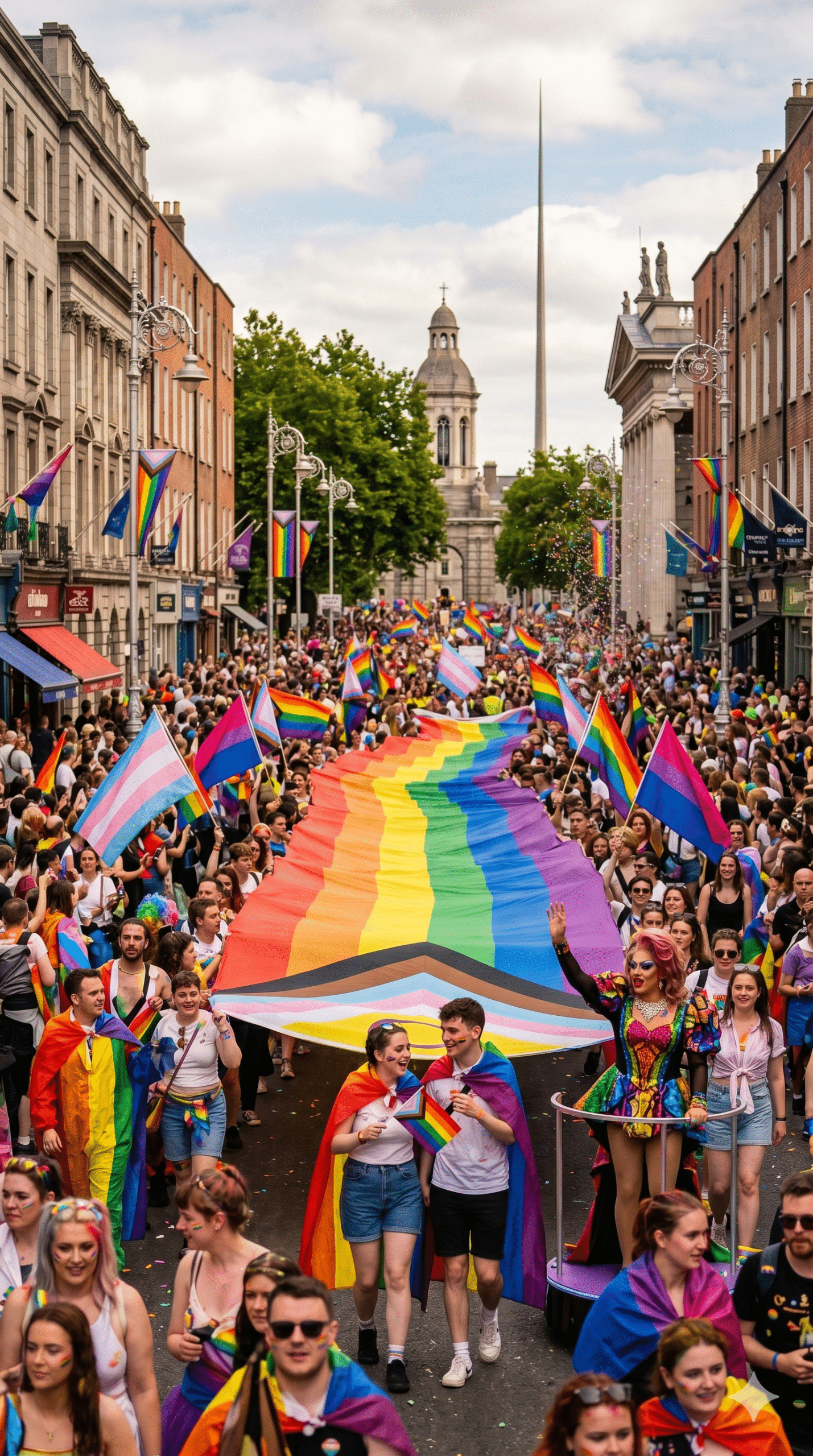
Dublin Pride is one of the largest pride celebration in Ireland. Given the country’s historically strong conservative and Catholic influence, it is the more remarkable to see what process has been made. By now, it can be considered as one of the leading countries for gay rights with legal recognition of same-sex marriage and full adoption rights. Yet, there is still some way to go, which is why the pride is not only a party, but remains a demonstration too. In this guide, you’ll find everything you need to know about Dublin Pride, including parade details, practical tips, nightlife recommendations, and what to expect when visiting Ireland’s largest LGBTQ+ event.
Dublin Pride Date
Dublin Pride normally takes place on the last weekend of June each year. There is event taking place the whole Pride month of June, even stretching into July consisting of Game Nights, Film & Book Clubs, Dance Classes, Workshops and much more.
When is the Dublin Pride taking place in 2026?
In 2026, the event is scheduled for Saturday, June 27.
What is the main party at Dublin Pride?
Probably the inoffically offical After Party is Mother Block Party. Mother is a popular gay party taking place each weekend, but taking place at the National Museum at Collons Barracks for Pride. It has three stages and is the biggest Pride After Party in Ireland.
Dublin Pride Route
The rally will assemble and start at O’Connell Street and takes the following route: Eden Quay -> Custom House Quay -> Talbot Memorial Bridge -> City Quay -> Lombard Street -> Westland Row -> Merrion Street Lower and the parade ends at Merrion Suare, which functions as Pride Square.
Dublin Pride Starting Time
The Parade starts starts at 12:30 pm and lasts around 2 hours.
Dublin Pride Key Facts
When did Dublin Pride first take place?
Dublin Pride goes back to Ireland’s early LGBTQ+ rights movement of the 1970s. The first official Pride Parade took place on 25 June 1983, just shortly after the Fairview March. This was a landmark protest caused by the murder of gay man Declan Flynn. What started as a small political demonstration demanding equality and an end to discrimination has grown into Ireland’s largest LGBTQ+ protest. Homosexuality was decriminalised in Ireland in 1993 and civil partnerships were introduced in 2011. In 2015 Ireland became the first country in the world to legalise same-sex marriage by popular vote.
How many visitors to Dublin pride?
Each year, over 100,000 people attend the parade as spectators.
This has been a huge growth from the 3.000 participants the parade attracted in 2004.
The parade itself features more than 12,500 registered participants, with thousands more joining through the route and watching from the sidelines.
What is the theme of Dublin Pride this year?
One Story – Many Voices
For more information about the event, check the official Dublin Pride Website.